
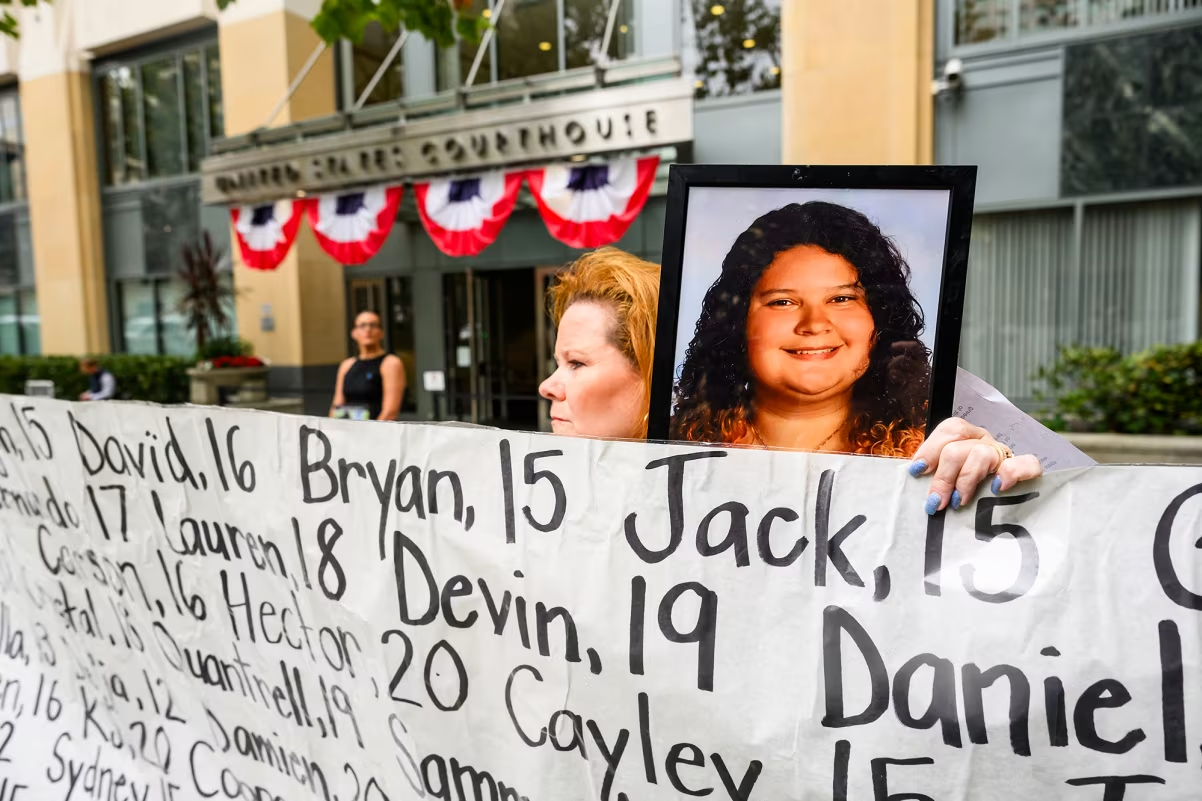
Today, Meta reached a landmark settlement of up to $18 billion after 29 state attorneys general sued the company for deliberately designing Facebook and Instagram to be addictive to children, all while hiding the mental health risks. Here at ASK, we want to make sure our community has a clear, straightforward breakdown of what this means for your family.
What Happened
A coalition of 29 states, led by attorneys general from California, Colorado, Kentucky, and New Jersey, took Meta to federal court in Oakland, California. Their claim: that Meta knowingly designed Facebook and Instagram with features intended to addict children and teenagers, collected data on children under 13 without parental consent, and concealed the mental health risks from the public.
Rather than continue through what was expected to be a six-week trial, Meta agreed to settle. The deal includes sweeping changes to how the platforms operate for users under 18.
What Meta Says They Will Do
As part of the settlement, Meta says they will implement the following changes to Facebook and Instagram for users under 18:
- A combined two-hour daily time limit across both platforms, with mandatory pauses after 15 minutes of continuous use
- Nightly access restrictions, blocking the platforms from midnight to 6am
- School-hour notification limits, muting push notifications from 8am to 3pm (with exceptions for direct messages and account security alerts)
- Hidden like and reaction counts by default for teen users
- Parental controls to turn off algorithmic feeds and autoplay
- Stronger age verification to identify users who may be 13 to 17 even if they provided an adult birth date
An independent auditor with broad access rights will review Meta’s compliance annually and issue reports directly to state enforcement officials for at least five years. Most provisions must remain in place for ten years.
These are commitments Meta says they will make. Implementation will be watched closely, and state attorneys general have made clear they will not hesitate to return to court if Meta falls short.
What About TikTok, YouTube, and Snapchat?
This settlement covers Facebook and Instagram. The other platforms your kids use every day are a separate conversation.
As part of the settlement announcement, Meta publicly called on TikTok and YouTube specifically to adopt the same rules, writing: “When teens are restricted on one app, they simply move to another. For meaningful progress to happen, we urge our peers to join us.”
Notably, a portion of Meta’s settlement payment is contingent on TikTok, YouTube, and Snapchat each adopting comparable safety measures, including a one-hour daily limit and night mode restrictions. State attorneys general have already signaled that these platforms are next on their radar.
Why This Matters for Our Community
The connection between social media and youth mental health is something ASK has been focused on for years. This settlement is a significant legal milestone, but it does not change the reality that our kids are growing up in a digital world that requires ongoing attention from the adults around them.
The changes Meta has agreed to are meaningful if followed through. But no app setting replaces an open conversation between a parent and a child.
What You Can Do Right Now
You do not have to wait for Meta, TikTok, or YouTube to act. Here are steps you can take today:
- Talk to your kids about the apps they use, how long they spend on them, and how those apps make them feel.
- Review the parental controls already available on Instagram, TikTok, YouTube, and Snapchat. Many tools exist today that go underused.
- Set your own limits. Family screen time agreements can be more effective than platform-imposed ones.
- Know the signs. Anxiety, sleep disruption, social withdrawal, and changes in mood can all be connected to social media use.
- Reach out for support if you are concerned about your child’s mental health. ASK is here to connect you with resources in our community.
ASK Is Here
At the Alliance for Safe Kids, protecting the wellbeing of children and families in our community is at the heart of everything we do. We will continue to monitor developments in this space and share resources as they become available.
If you have concerns about your child’s social media use or mental health, we encourage you to visit allianceforsafekids.org or reach out to us directly.
Together, we can make sure our kids are safe, online and off.
Sources: CNN, NPR, Axios, TechCrunch, SF Standard