
April is Alcohol Awareness Month
Source: SAMHSA
Why Small Conversations Make a Big Impression
Talking to your child at an early age about drinking is the first step toward keeping them alcohol-free. But as they enter junior high and high school, the pressure to try alcohol increases. It’s important to continue the conversation throughout adolescence.
Talking often builds an open, trusting relationship with your child.
Children are more likely to avoid drinking when they have a strong, trusting relationship with their parents. Get into the habit of chatting with your child every day. It will make it easier to have serious conversations about things like alcohol, and will make your child more comfortable coming to you for advice.
Lots of little talks are more effective than one “big talk.”
Sitting down for the “big talk” about alcohol can be intimidating for both you and your child. Try using everyday opportunities to talk— in the car, during dinner, or while you and your child are watching TV. Having lots of little talks takes the pressure off trying to get all of the information out in one lengthy discussion, and your child will be less likely to tune you out.
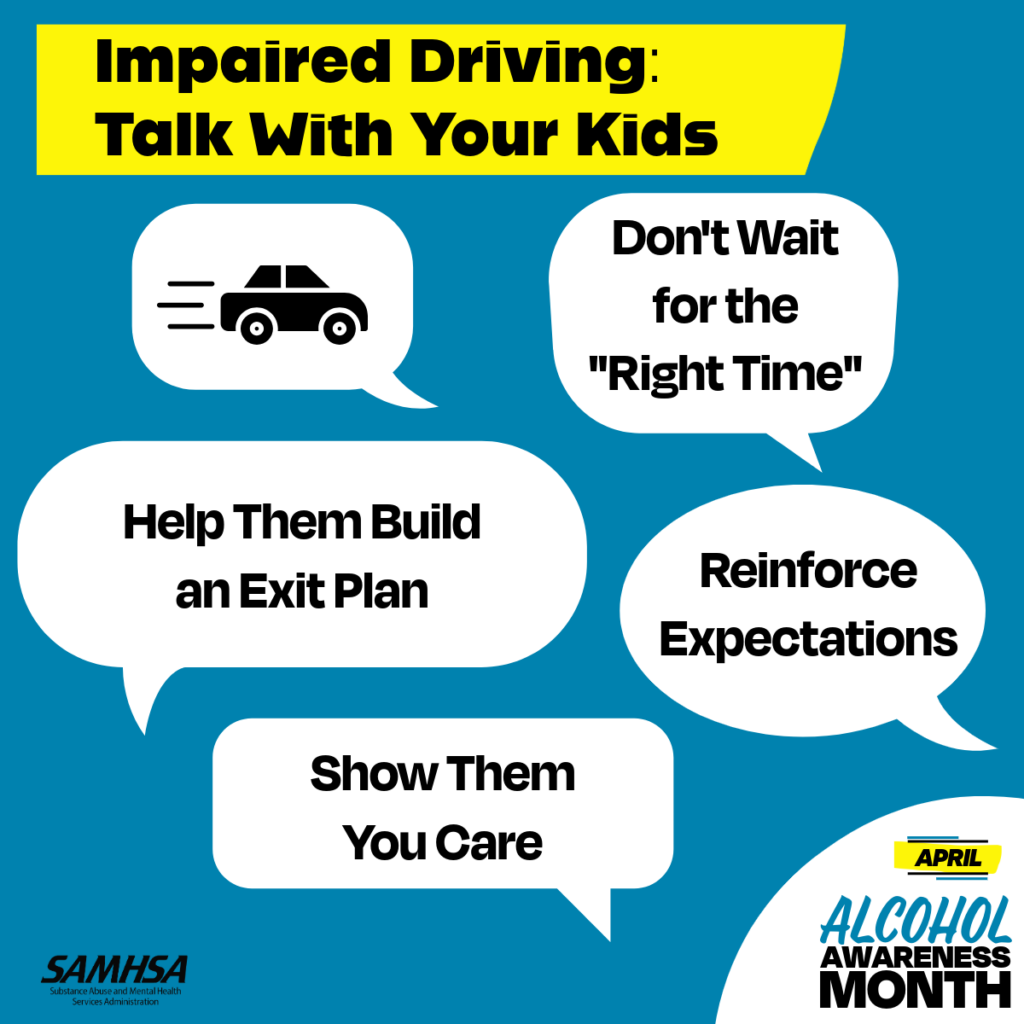
When you do talk about alcohol, make your views and rules clear.
Take the time to discuss your beliefs and opinions about alcohol with your child. Be honest and express a clear, consistent message that underage drinking is unacceptable. When they feel that you’re being real and honest with them, they’ll be more likely to respect your rules about underage drinking.
As children get older, the conversation changes.
What you say to a 9-year-old about alcohol is different from what you say to a 15-year-old. Children also can’t learn all they need to know from a single discussion. Make sure that the information you offer your child fits their age. As they get older, you can give them more information and reinforce your rules.
Remember that the conversation goes both ways.
Although talking to your child about your thoughts about alcohol is essential, it’s also important to hear their point of view. Give your child the opportunity to ask you questions, and listen to what they have to say. Children who have parents who listen to their feelings and concerns are more likely to say “no” to alcohol.
What you do is just as important as what you say.
In addition to talking often with your child about alcohol, it’s important to set a good example. If you choose to drink, you can positively influence your child by drinking in moderation and NEVER driving when you’ve been drinking. Be aware of where you keep your alcohol, and always remind your child that the alcohol in your house is off-limits.
In Loving Memory…
Our hearts go out to the Gorman family at this devastating time. May they feel the strength and care of the entire community around them.
For resources to help navigate the deep grief you and your family are feeling, please click here.

ASK is proud to curate the virtual Save A Life Wellness Fair which will connect you to resources that support Substance Misuse Prevention, Treatment and Recovery; Mental Health and Opportunities for Thoughtful Service.
Click here to view the virtual Save A Life Wellness Fair and download the application on your phone. You never know when you, a friend, neighbor or loved one may need this vital information and by having it readily available it truly may be the most important gift you have ever given yourself or shared.
Life is hard, let’s be prepared to take good care of ourselves and one another.

Volunteer Opportunities
There are a variety of volunteer opportunities at awesome nonprofits throughout Westchester and Putnam Counties. To view these opportunities, please check out Volunteer New York!
The John C. Hart Memorial Library in Shrub Oak can always use some volunteers! To find out about their Teen Volunteer Program, click here.

Yorktown Leos Club
Leadership, Experience, Opportunity! The Yorktown Leos are a community service club for people ages 12-25 willing to help others in the community. They host and participate in a variety of fun and collaborative events. The Yorktown Leos Club has been helping the Yorktown community for over 25 years and to learn how to get involved, click here.
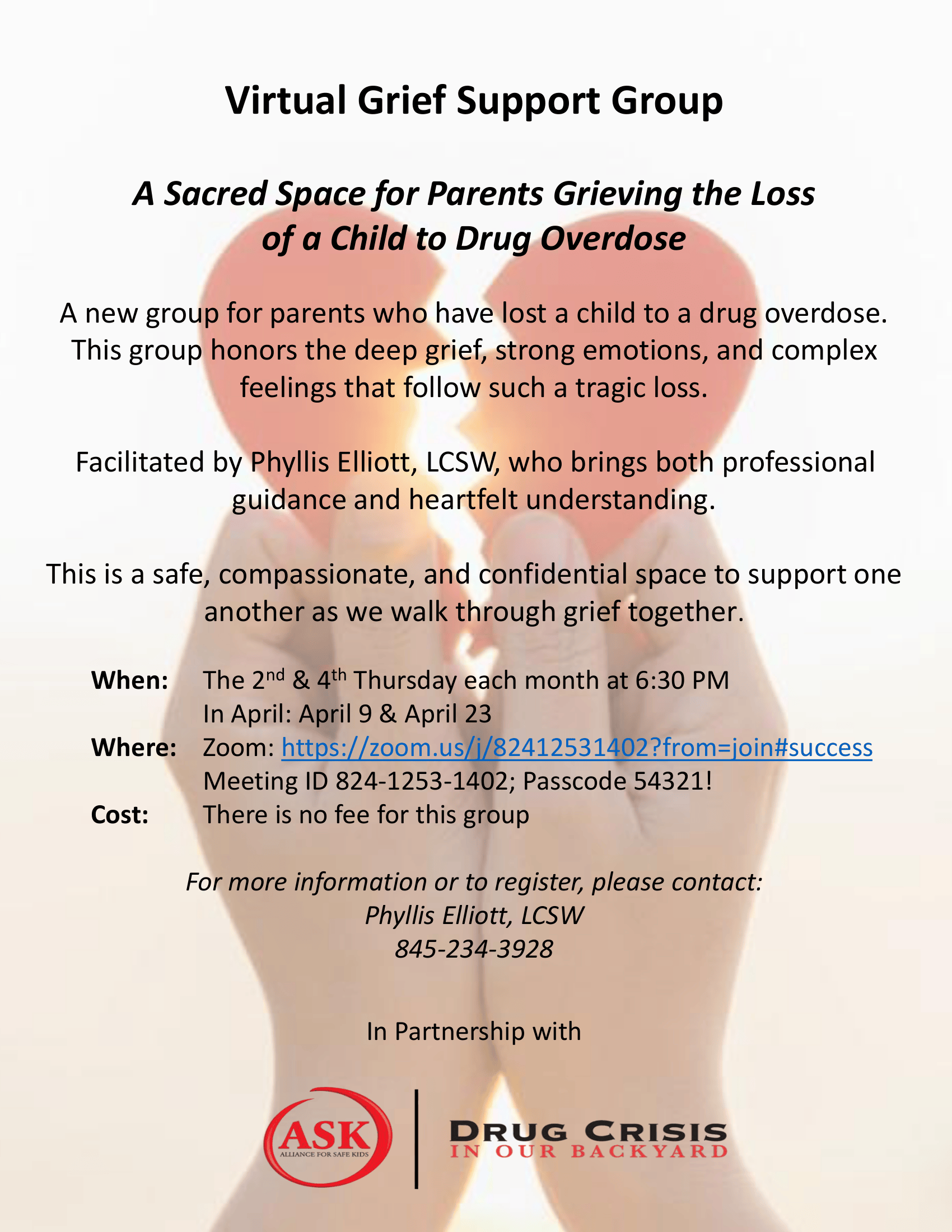
Weekly Spotlight Family Support Groups
From our partners at Drug Crisis in Our Backyard, weekly Spotlight Family Support Groups, held virtually every Tuesday and Wednesday via Zoom. Spotlight on Recovery is a Family Educational and Support Group for families struggling with a loved one misusing substances. For more information, click here.
Virtual Naloxone Training
Naloxone is a prescription medicine that reverses an overdose by blocking heroin or other opioids in the nervous system for 30-90 minutes. Naloxone is administered by injection or intranasal. Following training, participants receive a kit by mail. Presented by our partners at Drug Crisis in Our Backyard. Please inquire about setting up a virtual training by contacting Susan Salomone at: ssal@drugcrisisinourbackyard.com.
Feeling overwhelmed? Join Us for Nervous System Regulation and Gentle Movement
This will be a safe space where we may connect and come home to ourselves. Practice may be done from a seated position, with options to stand for moving meditations. For more information, click here.
Student Assistance Services Corner
“Helping Students Enhance Their Well Being by Making Healthy Decisions and Remaining Substance Free”
A partnership between a parent/guardian and Student Assistance Counselor best supports the nurturing of the social and emotional wellbeing of students. We encourage you to contact the SAC at your child’s school for a confidential consultation. Click here to learn more.
| Lakeland High School Sasha Meyer Porco, LMSW, CASAC smeyerporco@lakelandschools.org | Lakeland Copper Beech Middle School Ms. Finan, MS lfinan@lakelandschools.org | Yorktown High School Kiara Loughran, MS sacounselor@yorktown.org |
Upcoming Events
April 9 – Self-Care and Wellbeing: A Hands-On Approach
It’s normal to experience anxiety, fear, anger, and grief during times of uncertainty. Now, more than ever, it’s important to recognize these feelings and allow time to recharge – but too often we feel guilty for taking time to meet our basic needs. Explore what self-care is, why it’s so important, and practical tips for incorporating self-care into your daily life with a licensed therapist. Register here.
April 16 – Responding in a Mental Health Emergency
This course is designed for anyone who wants to feel more confident supporting someone experiencing a mental health crisis. You’ll learn how to recognize when someone is struggling, respond calmly and compassionately without making the situation worse, and know when it’s time to seek additional help. Register here.
April 22 – Talking to Kids about Mental Health
Children are curious about their environment and the people around them. Learn how to help children understand what mental illness is and is not, and how to answer their questions. Register here.
April 29 – Inside the Medicine Cabinet
Hosted by Operation Parent, the first session of a two-part series on preventing first-time substance use, we’ll look inside the medicine cabinet. Learn how to talk about commonly misused medications, set clear expectations, and practice safe storage and disposal at home. Register here.
NAMI Westchester
The families and members of NAMI Westchester are here to help! They offer understanding to anyone concerned about mental illnesses and the treatment of mental illness. To view their calendar, click here.
Westchester Breathes is an ongoing program offered by the Westchester Library System offering an experience of gentle movement, breathing and relaxation exercises that reduce stress and anxiety and increase a sense of calm and well-being. These exercises are simple and evidence-based – which is to say…they work! They are free and on Zoom. Register here.